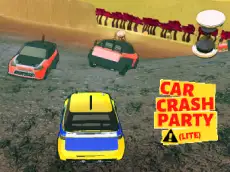
Car Crash Party (LITE)
Experience high-speed driving and physics-based collisions in this lightweight arcade racer where the goal is to navigate vehicles through environments and test the limits of impact.
About Car Crash Party (LITE)
Car Crash Party (LITE) focuses on the core mechanics of vehicle handling and impact physics within a 3D environment. This arcade-style driving game allows players to experiment with momentum and collisions, utilizing a straightforward control scheme designed for keyboard input. The emphasis is on the tactile feel of the car as it reacts to the environment, making it a suitable choice for fans of physics-driven simulations.
The game provides a focused experience where players can test different driving maneuvers and observe the resulting damage. By offering multiple camera perspectives, the title allows for a better view of the surrounding space and the impact of every crash. It is an accessible entry point for those looking for quick sessions of vehicular chaos without complex progression systems.
- Genre: Driving
- Platform: Browser
- Mode: Singleplayer
- Developer: alessandrovinacciavideogames
- Mobile support: No
- Release: 03/08/2021
Why players like Car Crash Party (LITE)
- Physics-based vehicle interactions and collisions.
- Multiple camera angles for better visibility during play.
- Simple and responsive keyboard-based driving controls.
- Fast-paced arcade gameplay focused on car dynamics.
Instructions
SPACE = accelerate
CTRL = brake
←→ = handling
C = camera
How to play
Navigate your vehicle through the environment using the keyboard. Use the space bar to build up speed and the control key to apply brakes when approaching obstacles. Adjust your steering with the arrow keys to line up specific impacts or avoid hazards. You can toggle the camera view with the C key to get a better perspective of your surroundings or to inspect the damage after a collision.
Tips for beginners
- Switch camera views frequently to judge distances more accurately during high-speed maneuvers.
- Use the brake key effectively to regain control if the vehicle begins to slide or drift.
- Experiment with different speeds to see how the physics engine handles various collision intensities.