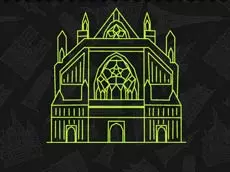
Doodle History: Architecture
Doodle History: Architecture is a logic-based puzzle game that challenges your spatial reasoning as you reconstruct iconic historical structures through a unique and minimalist hand-drawn art style.
About Doodle History: Architecture
Doodle History: Architecture invites players to engage with the evolution of building design through abstract logic puzzles. By manipulating scattered lines and geometric fragments with the mouse, you must find the correct alignment to reveal famous monuments from different eras. The game emphasizes visual perception and mathematical symmetry, requiring players to interpret how 2D shapes coalesce into recognizable architectural landmarks.
The experience is designed for those who appreciate a methodical approach to problem-solving. Its clean interface and educational undertones make it suitable for puzzle enthusiasts looking for a calm, intellectually stimulating challenge. As you progress, the complexity of the sketches increases, testing your ability to visualize structural patterns and historical forms within a collection of minimalist doodles.
- Genre: Logic
- Platform: Browser
- Mode: Singleplayer
- Mobile support: No
- Release: 09/03/2017
Why players like Doodle History: Architecture
- Minimalist aesthetic that focuses on the beauty of architectural lines.
- Satisfying mechanical feedback when shapes snap into place.
- Educational theme exploring historical building designs.
- Relaxing pace without the pressure of timers or high-speed action.
Instructions

How to play
Use your mouse to interact with the fragments on the screen. Click and drag to rotate or reposition the lines and shapes. Carefully observe the orientation of each piece and how it might connect to others. The objective is to align all elements correctly until the scattered doodle transforms into a complete architectural structure from history.
Tips for beginners
- Identify distinctive features like arches or pillars to serve as a starting point.
- Slowly rotate larger clusters of lines to see how they interact with the background.
- Focus on the negative space between lines to help visualize the final shape.