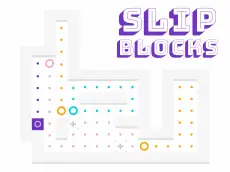
Slip Blocks
Slip Blocks is a minimalist puzzle game where you manipulate sliding elements to solve spatial challenges, offering a clean logic experience for fans of board-style brain teasers.
About Slip Blocks
Slip Blocks focuses on spatial reasoning and precise movement within a structured grid. As a logic-based board game, it challenges players to navigate blocks across the screen using simple click or touch interactions. The gameplay emphasizes sequence and planning, requiring you to think several steps ahead to reach the desired outcome through careful manipulation of the board state.
Developed by Prickle Games, this title provides a relaxing yet mentally stimulating environment. Its HTML5 foundation ensures smooth performance across both desktop and mobile devices, making it easy to pick up for a quick session. It is particularly well-suited for players who enjoy clean aesthetics and puzzles that reward patience and logical deduction over fast-paced action.
- Genre: Logic
- Platform: Browser
- Mode: Singleplayer
- Developer: Prickle Games
- Recommended age: 7+
- Mobile support: Yes
- Release: 12/28/2020
Why players like Slip Blocks
- Clean, distraction-free visual design that aids focus.
- Intuitive mouse and touch-based controls for seamless play.
- Satisfying logic-driven progression that rewards clever thinking.
- Accessible mechanics suitable for players aged 7 and up.
Instructions

How to play
Use your mouse or touchscreen to interact with the blocks on the board. Each move shifts the blocks across the grid, requiring you to find the correct path to complete the level. Focus on the layout of the board and how each movement affects the position of other elements. Since the game relies on logic rather than speed, take your time to analyze the grid layout before making your next move.
Tips for beginners
- Observe the entire board layout before initiating your first move to avoid early mistakes.
- Pay close attention to how blocks interact with the edges of the grid and other obstacles.
- If you find yourself stuck, try visualizing the solution in reverse from the goal.
- Look for recurring movement patterns that can help simplify complex board states.