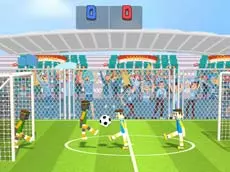
Soccer Physics 2
Soccer Physics 2 delivers a chaotic and humorous sports experience where unpredictable movements and simple controls turn every match into a hilarious challenge for one or two players.
About Soccer Physics 2
This sequel continues the tradition of physics-based sports games where player movement is intentionally difficult to master. By focusing on awkward momentum and timing rather than realistic simulation, the game creates a lighthearted environment suitable for all ages. You control characters that jump and kick in unconventional ways, making every goal feel like a combination of skill and luck.
The game excels in its two-player mode, allowing friends to compete locally on the same keyboard. Because the controls are limited to just two keys per person, the focus shifts to timing your jumps and kicks against the erratic behavior of the ball. It is an ideal choice for players looking for a quick, funny sports game that does not take itself too seriously.
- Genre: Sports
- Platform: Browser
- Mode: Singleplayer
- Developer: webgameapp
- Mobile support: No
- Release: 12/11/2018
Why players like Soccer Physics 2
- Unpredictable physics that create funny and unexpected gameplay moments.
- Simple two-button control scheme accessible to players of all skill levels.
- Engaging local multiplayer mode for competitive fun with friends.
- Fast-paced matches that are perfect for short, entertaining gaming sessions.
Instructions
WD = player 1
↑← = player 2
How to play
Each player uses two specific keys to control their team. Player 1 uses the W and D keys, while Player 2 uses the Up and Left arrows. Use these inputs to make your players jump or lean, attempting to strike the ball toward the opponent's goal. Success depends on timing your movements to coincide with the ball's position while managing the wobbly physics of your athletes.
Tips for beginners
- Time your jumps carefully to avoid over-rotating and leaving your goal exposed.
- Observe the ball's bounce to better anticipate where your players need to be.
- Use quick, rhythmic taps to maintain balance rather than holding keys down.